Kanchanaburi with Kids: Nature Without Losing Comfort
A practical guide to visiting Kanchanaburi with kids, with ideas for easier routes, age-friendly activities, meals, breaks, and smoother travel days.
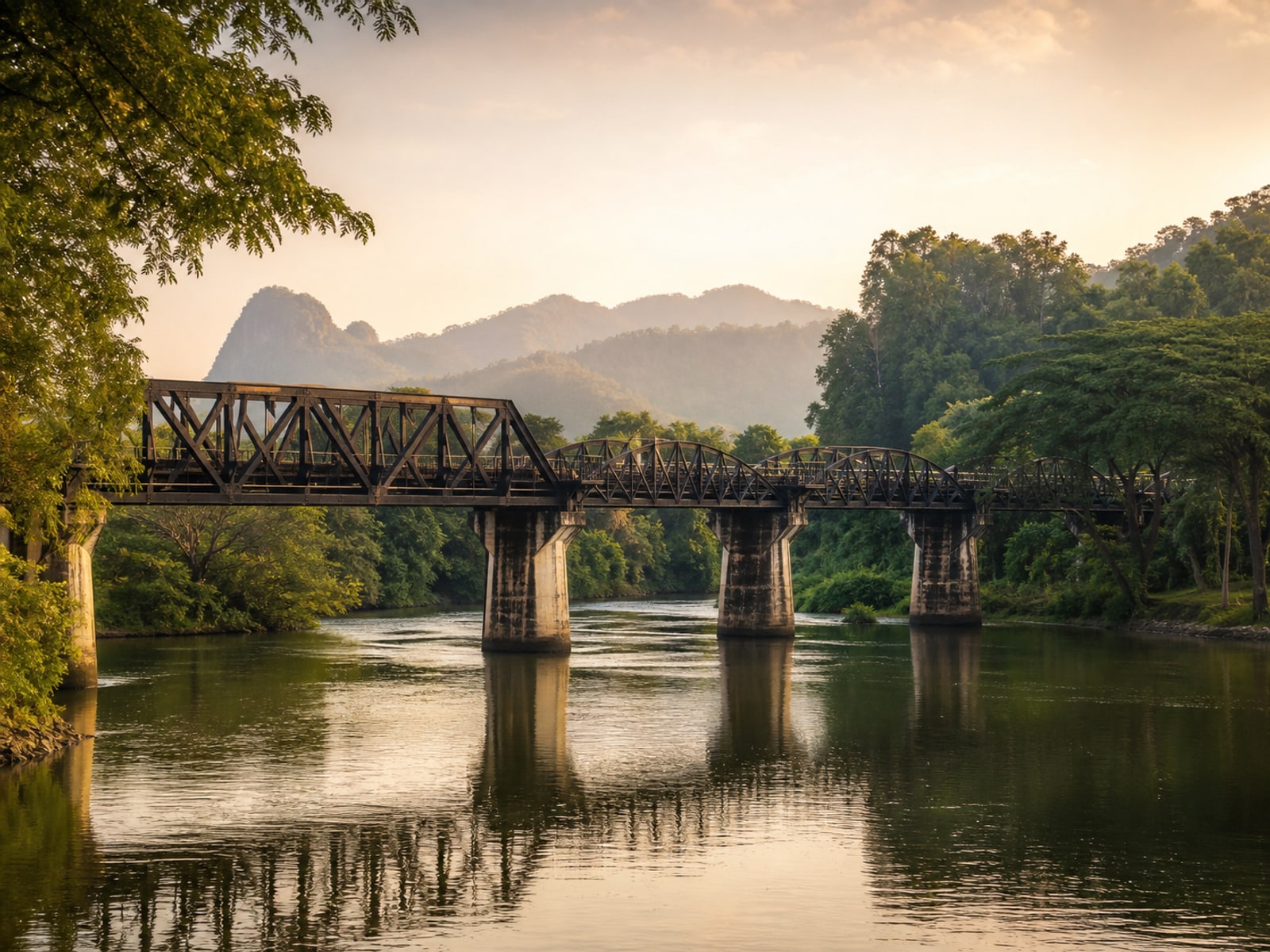
Kanchanaburi with children has to be planned around real road time: the bridge, river, waterfalls, and nature stays do not sit together like pins on a screen. Give each day one major theme, explain wartime history at an age-appropriate level, and reserve time after water activities for changing, food, and rest. The scenery is easier to remember when nobody is being rushed to the next stop.
Reviewer's take: Choose either a river-and-history day or a waterfall day as the headline. Combining both is possible on a map, but rarely generous to a child's energy.
Build One Day Around the River
The bridge and river corridor work well as a first chapter because travel between stops can stay manageable. Pick one historical place, allow children to ask questions, and avoid turning difficult history into a photo hunt. A short riverside walk or an early meal is enough for the second half of the outing.
Check shade, toilets, platform edges, and walking distance before arrival. If a train ride is part of the plan, verify the current timetable directly and keep another activity flexible; rail time is not a promise that every other booking will wait.
Give a Waterfall Its Own Day
A waterfall trip needs an earlier start, footwear with grip, drinking water, dry clothes, and a realistic turnaround time. Trail levels, water conditions, and access rules can change with weather. Use the official park notice as the decision-maker, even when older reviews say the route was easy.
Children who are confident in a pool may still struggle with current, slippery rock, or changing depth. Adults should set the boundary before play begins and keep active supervision near water rather than watching from a picnic spot.
Choose a Base That Shortens the Hardest Day
Staying in town makes food, the bridge area, and transport easier. A nature stay can reduce the morning drive for an outdoor day but may offer fewer late meals and services. Compare the route of the most demanding day first; the cheapest room is poor value if it adds two tired hours in the car.
Ask about stairs, balcony rails, river access, extra beds, breakfast timing, and the distance from parking to the room. “Family friendly” is a useful claim only after these details match the children and older relatives in the group.
Protect Meals and the Return Journey
Carry a familiar snack without replacing the chance to try local food. Plan lunch before hunger becomes the loudest person in the group, and keep one clean change of clothes within reach rather than at the bottom of the luggage.
The return drive is part of the itinerary. Stop before the driver is exhausted, especially after swimming or a long outdoor day. An early dinner near the hotel is often a stronger ending than one more attraction before closing time.
Keep a Small-Day Alternative
Heavy rain, high water, heat, or low energy can cancel the headline plan. Prepare a shorter town route, a calm meal, and a place to rest without crossing the province. The alternative should feel like a different good day, not a consolation prize assembled in the car park.
Family Summary
Kanchanaburi is most rewarding when the river, history, and nature are given separate space. One major experience, a practical base, active water safety, and a protected rest period create a family trip that feels adventurous without becoming punishing. Check current park notices, transport schedules, weather, and property conditions directly before travel.
Frequently asked questions
What kind of family trip is Kanchanaburi best for?
It works best for families who prefer a manageable pace, clear daily priorities, and enough flexibility to adjust around children, meals, and energy levels.
How can families keep the trip from becoming too tiring?
Choose only a few important activities each day, keep stops close together, leave room for breaks, and prepare simple alternatives when the group needs to slow down.