Kanchanaburi Nature Trip for Families
A practical family guide to Kanchanaburi, covering where to stay, how to pace each day, and how to keep the trip comfortable for adults and children.
Kanchanaburi gives families two different trips: an accessible river town with layered history, and a much larger province of waterfalls, forests and winding roads. The practical choice is to experience them in sequence. Begin in town, then dedicate a separate day to one natural area instead of collecting distant names.
Reviewer's take: Erawan or Sai Yok can be the centre of a memorable day; neither should be treated as a quick add-on after several museums and a long lunch. Nature is more enjoyable when the family arrives with time and energy left.
Day one belongs to town and river
Use Kanchanaburi town to settle into the province. Choose one history stop appropriate to the children's ages, then balance it with a riverside walk, a relaxed meal or time at the hotel. Adults should explain difficult wartime history honestly but briefly, following the child's questions rather than forcing a complete lesson.
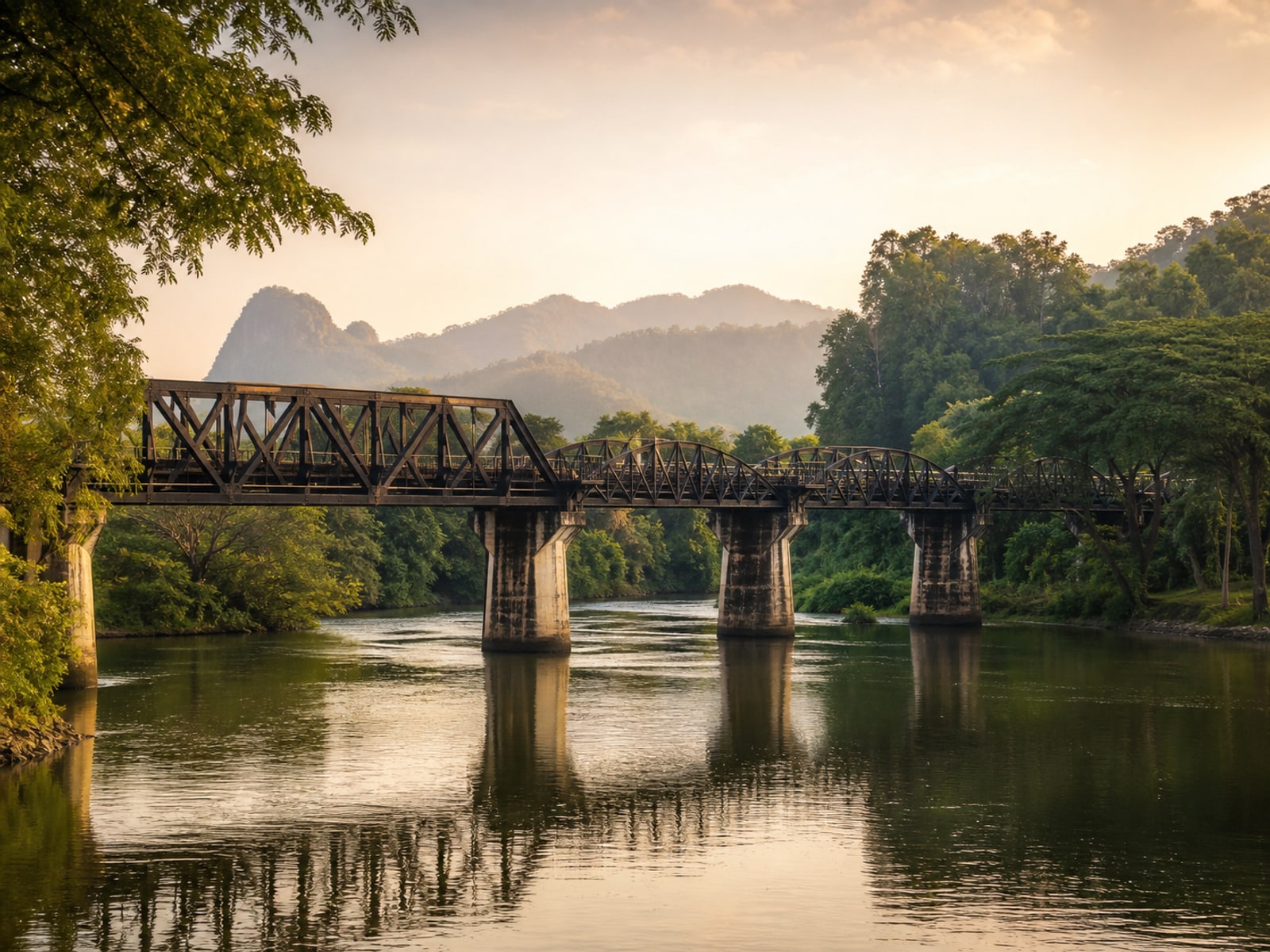
The bridge and railway are working transport spaces as well as landmarks. Stay alert, follow staff instructions and never position children for photographs where movement or rail operations make it unsafe. The most responsible image is the one that does not obstruct another person or create risk.
Give nature its own day
Erawan National Park is the obvious family choice for waterfalls, but the experience changes with water level, weather, trail conditions and park rules. Leave early, wear shoes with grip and decide in advance that the group does not need to reach every level. The lowest comfortable pools and forest walk may be enough for young children or older relatives.
Sai Yok creates a different route, with river and forest experiences spread along the western corridor. It works best for families already staying on that side. Trying to combine Erawan and Sai Yok in one day produces more driving than discovery, so choose according to the accommodation and the group's appetite for roads.
Water deserves adult attention
Beautiful water is not automatically safe water. Check current warnings, depth, current, permitted swimming zones and life-jacket requirements with park staff or the licensed operator. Keep children within reach and use appropriate flotation equipment; inflatable toys are not safety devices. Stop the activity when rain, fatigue or visibility changes.
Choose accommodation by tomorrow morning
Kanchanaburi town offers the easiest range of food and services. A riverside stay outside town can be wonderfully quiet, but ask about road access, stairs, open edges, boat transfers and dinner options before booking. If the main event is Erawan, a western base may shorten the early drive; if the group wants museums and varied meals, town is usually simpler.
Make the province lighter to visit
Carry refillable bottles, take rubbish back from picnic areas and use established trails. Do not feed wildlife or pressure guides to enter closed areas. Local restaurants, guides and small accommodation can add real context, but book services that explain safety and environmental limits clearly.
Family verdict
Plan at least two nights: one day for town and river history, one for a single nature corridor. Add a third night if the drive to Kanchanaburi is long or the family needs a recovery morning. Verify park access, railway arrangements, river conditions and transport directly before travelling.
Frequently asked questions
What kind of family trip is Kanchanaburi best for?
It works best for families who prefer a manageable pace, clear daily priorities, and enough flexibility to adjust around children, meals, and energy levels.
How can families keep the trip from becoming too tiring?
Choose only a few important activities each day, keep stops close together, leave room for breaks, and prepare simple alternatives when the group needs to slow down.